
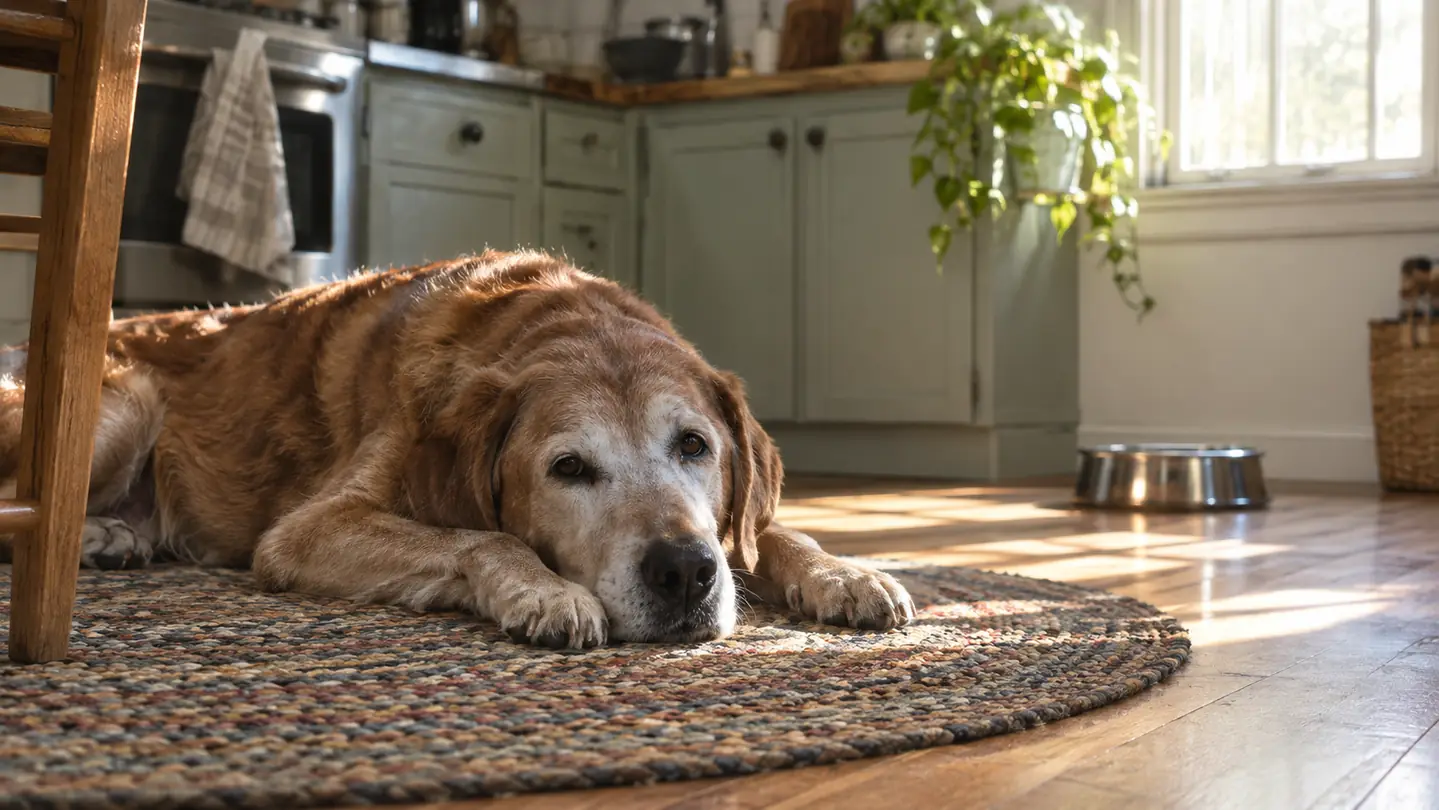
Years ago I poured out the last of one bag, opened a new one the next morning, and thought nothing of it. By that evening Juniper was off her dinner. By midnight I was standing in the yard in my robe with a flashlight, waiting on a dog who was perfectly fine and deeply confused about why we were outside. That was the last time I ever changed a dog's food in a single meal.
She is ten now, sixty-four pounds, white around the muzzle, and her stomach has only gotten less forgiving with age. In February 2025 I moved her onto Blue Buffalo Life Protection Formula Senior 7+, the chicken and brown rice formula, and it took ten days of mixing old and new to get there. Ten days sounds excessive until you have spent one night in the yard with a flashlight. What follows is the routine exactly as I ran it, including the parts I do differently now. I am not a vet and none of this is veterinary advice. If your dog has a real medical problem, that conversation belongs with the person who went to school for it.
The bag waiting at the end of the ten days
Blue Buffalo Life Protection Formula Senior 7+ in chicken and brown rice is what Juniper has eaten twice a day since February 2025. Real chicken first, brown rice and whole grains alongside it, and the LifeSource Bits blended through every bag. Before day one of a slow switch, you want the new bag already in the pantry.
Amazon Check Today's Price on Amazon →Step 1: Get your vet's read before you buy a bag
The first call is not to the store. It is to your vet, and it is a short conversation. At Juniper's yearly checkup I mentioned two things: she was stiff on cold mornings, and a sudden food change had given her loose stools twice that year. The answer I got was not a brand name. It was to make any change slowly, plus a note that a senior formula was a reasonable thing to try for a dog her age. That is about the extent of what anyone can tell you about a bag you have not bought yet, and it is worth having in your pocket before you spend ten days on it.
Senior on a dog food bag is a marketing category, not a regulated one. No board decides that a seven-year-old Labrador needs this bag and a six-year-old needs that one. What the packaging actually gives you is the guaranteed analysis and the ingredient list, and the age on the front is a hint about proportions rather than a promise. Senior formulas generally run a little lower in fat, sometimes a little higher in fiber, often with something added for joints. Treat it as a starting point you then confirm with your vet, not a prescription.
One more thing before the actual work. If your dog is vomiting, has blood in the stool, is losing weight, or has stopped eating altogether, that is a vet visit and not a food experiment. A slow transition solves a sensitive stomach adjusting to a new formula. It does not solve anything else, and putting off a real diagnosis because you are on day four of a mixing schedule is a bad trade to make with a dog who cannot tell you what hurts.
Step 2: Read the bag and measure before you open it
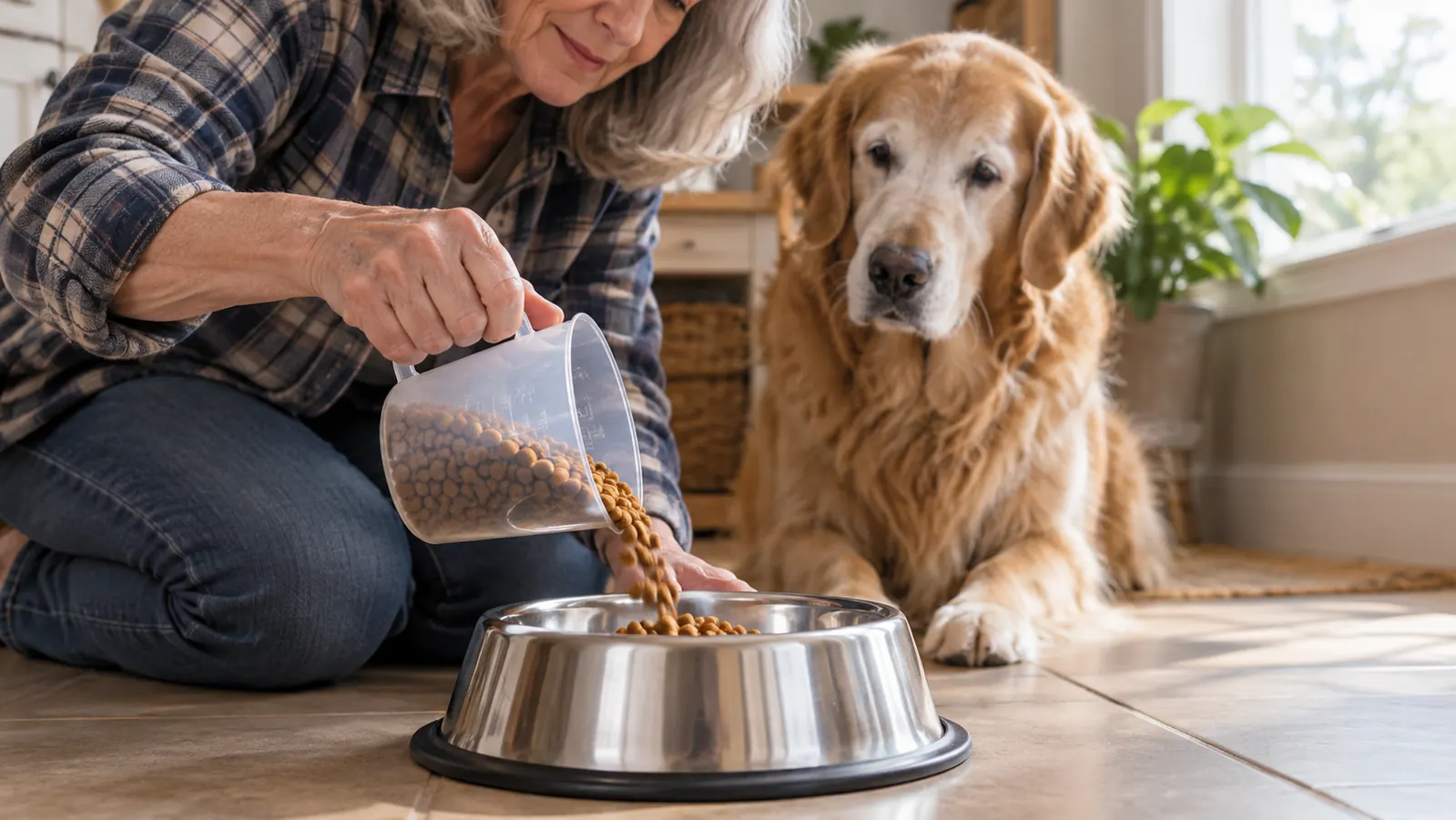
Open the bag on the counter, not over the bowl, and read the feeding chart with your dog's actual weight and age in front of you. Juniper was sixty-four pounds and carrying a couple of extra ones she did not need. The Blue Buffalo chart gave a range for her weight, and the vet had already told me to aim at the low end of it. Measured with a real cup, twice a day, at seven in the morning and five in the afternoon. Not a coffee mug. Not the scoop that came free with something else. A cup.
What is in the bag matters less than whether your dog will still be eating it in six months, but it is worth knowing. Blue Buffalo starts this formula with real chicken, builds the carbohydrate side on brown rice and other whole grains, and lists the bag as corn-free, soy-free and wheat-free. The LifeSource Bits mixed through the kibble are described on the label as a precise blend of antioxidants, vitamins and minerals. Juniper picks them out and eats them first, which tells you nothing about nutrition and everything about her.
Buy the next bag before you finish the current one. A 15 lb bag lasts us roughly three weeks, so I buy the replacement the day I open the last one in the pantry. Running out in the middle of a transition means stirring whatever the nearest store had on the shelf into a stomach that is already working hard, which is the exact opposite of the point of all this.
Step 3: Mix for ten days, in quarters
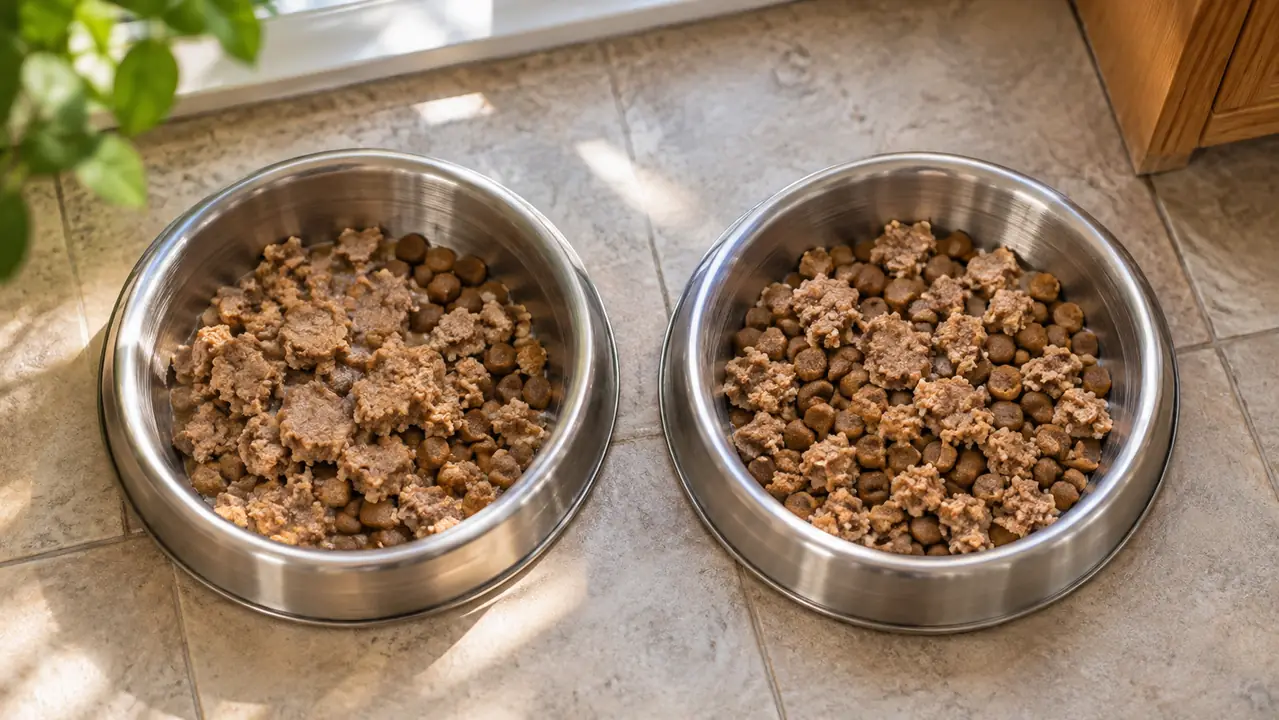
Here is the schedule I used, and it is the one I would use again. Days one through three: three quarters old food, one quarter new. Days four through six: half and half. Days seven through nine: three quarters new, one quarter old. Day ten: all new. That is longer than the five days some bags suggest, and it is the difference between a dog who notices nothing and a dog who notices everything.
Mix it dry, in the bowl, and mix it properly. Kibble separates, and a dog who nudges the new pieces to the rim and eats only the familiar ones has not actually transitioned to anything. I portion the whole day's mix in the morning and split it at five o'clock, which keeps the ratios honest on days when I am in a hurry and tempted to eyeball it.
If the stool gets loose, stop where you are and hold that ratio for another two or three days before moving on. The schedule is a guideline, not a train timetable, and nothing bad happens if you finish on day thirteen. Juniper stalled for two extra days at the halfway point. It cost me nothing and probably saved me a night in the yard.
Step 4: Watch the bowl and the yard for two weeks
You know what your dog's normal looks like better than any chart does. Pick up the stool and notice how firm it is. Notice gas, notice whether dinner takes four minutes or forty seconds, notice if she walks away from a half-full bowl. During a switch, those are the four things worth your attention, and most of the rest of what happens that week is not the food and will get blamed on it anyway.
Two things I watch for and one I have learned to ignore. I watch refusal, meaning half a bowl left twice in a row. I watch loose stool that lasts more than a day or two, or anything with blood in it, and that is a call to the vet rather than another day of waiting it out. What I try not to do is blame new kibble for a single soft stool after a morning of eating grass in the yard, because I have made that mistake and it cost me a perfectly good bag of food.
The other rule is one change at a time. Not a new food, a new treat, and a new supplement in the same week. If something goes sideways you will have no way of knowing which of the three did it, and you will end up throwing out the wrong bag and starting over with a dog who is tired of the whole business.
Step 5: Settle in, then recheck the amount after a month
The chart on the bag is a starting point, and the right amount is whatever keeps your dog at a healthy weight on the food they are actually eating. A month after the switch I put Juniper on the scale at the clinic and she was a little over where I wanted her. Measured portions and an extra loop on the evening walk took a few pounds off over the months that followed, and she gets up easier for it. The number on the bag never changed. The number in the cup did.
Storage matters more than people give it credit for. A few winters back mice got into an open bag in the garage, and that was the end of buying kibble in anything but an airtight container. Mine holds the whole fifteen pounds, sits on wheels by the back door, and gets hand washed between bags. Stale kibble makes a dog go off her food for a reason you will spend a week trying to find.
And keep the routine boring. Same two meals, same times, same cup. We use a puzzle bowl at both feedings because Juniper used to inhale dinner in under a minute and bring some of it back up on the rug. Not every dog needs one. Every dog does better eating at a pace their stomach can keep up with.
Ten days of mixing, one cup at a time, and I have not stood in the yard in my robe with a flashlight since.
What Else Helps
Keep the supplements out of the switch entirely. Juniper gets a joint chewable at breakfast and a pump of liquid omega-3 over her kibble, and both of those waited until the food transition was finished and two weeks of ordinary had gone by. Adding a supplement in the middle of a diet change is how you end up with a puzzle you cannot solve and a bottle you are afraid to open.
Warm water helps more than you would think. A tablespoon or two of warm, not hot, water over the kibble softens it slightly and makes a new food smell like something worth eating. That matters for an older dog with a dulled sense of smell or a sore mouth, and it costs you nothing but a kettle.
Fresh water in a clean bowl, washed often enough that it does not smell, is the whole rest of the list. Exercise and a lean body are the other half of the job. A senior dog who walks every morning and stays near her ideal weight moves better than a heavier dog on exactly the same food, and no bag of kibble changes that math. Two walks a day here, longer in the morning, shorter and slower in the evening once the ice sets in.
The bag I buy every three weeks
No rotating formulas, no guessing, no drama at the bowl. Blue Buffalo Life Protection Formula Senior 7+ in the 15 lb bag, measured twice a day, has been Juniper's dinner since February 2025. The ten days above matter more than the bag does. But this is a good bag to spend them on.
Amazon Check Today's Price on Amazon →