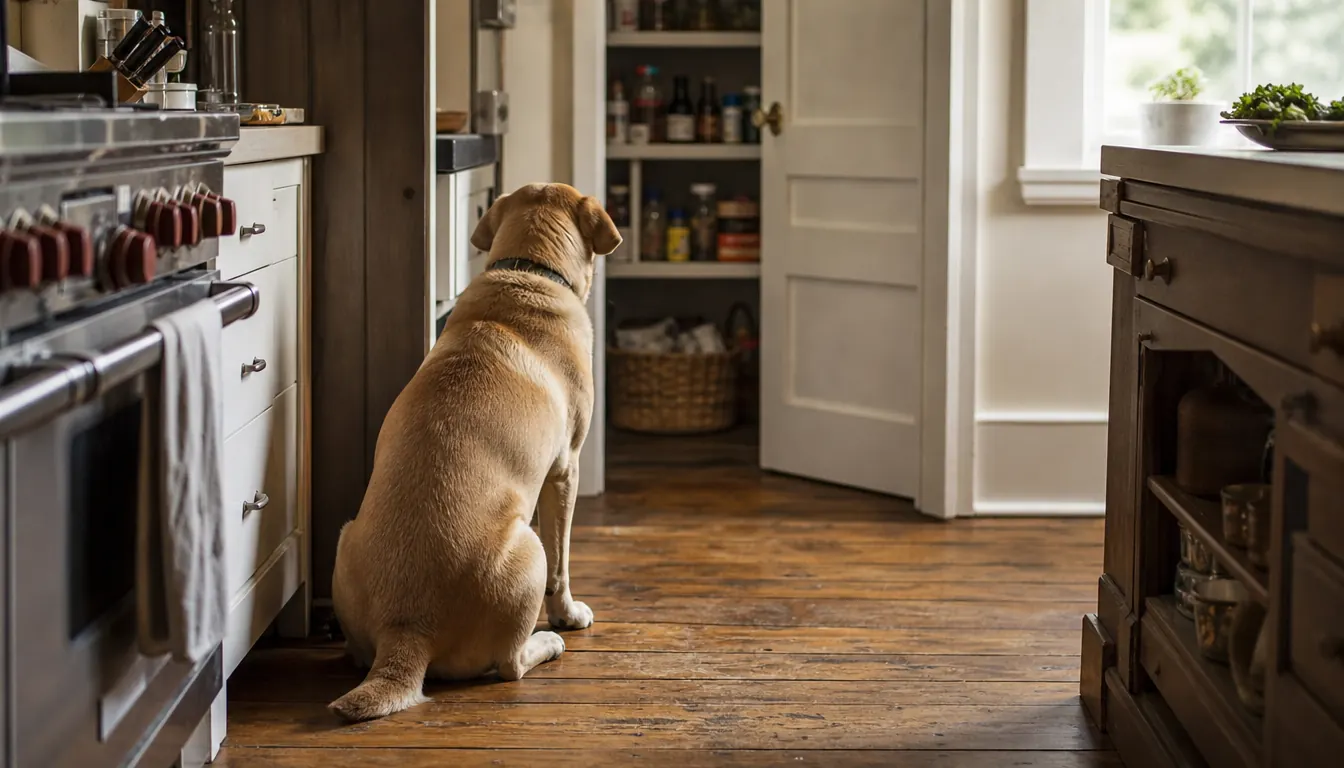
Juniper turned ten this fall. Golden Retriever, sixty-four pounds, white muzzle, and a stomach that files a formal complaint if I change her food too fast. In January 2023 I walked into the garage, opened the bin where I kept her kibble, and found the corner of the bag chewed through with kibble scattered across the concrete. Mice, in a garage that runs from twenty below to forty above depending on the week. I carried the bag inside, ordered the IRIS USA storage container that has sat in my pantry ever since, and I have not lost a bag to anything since.
Here is what I know now that I did not know then. Kibble goes off for the same reasons bread does: air, moisture, heat, and time. A bag is a shipping container. It was built to survive a truck, not to be opened and closed twice a day for a month beside your stove. The food inside is sprayed with fat, and fat is the part that turns first. When someone tells me their dog went off her food, I ask where the bag lives before I ask what brand it is. That is not a knock on the food. It is an honest look at the storage.
Four years in, the latch still snaps like it did the first week
The IRIS USA container holds up to 54 lbs of dry food, closes with snap-lock latches and an airtight seal, and rolls out of the pantry on casters. Mine has been in twice-daily use since January 2023.
Amazon Check Today's Price on Amazon →The Five Steps, in the Order I Do Them
Step 1: Get the Food Out of the Bag, Then Keep What Is Printed on It
A folded bag with a chip clip is not a container. It is a suggestion. Every time you open it, kitchen air goes in, and the bag sits on the floor, which is where mice commute. I did it for years and told myself it was fine because the bag was heavy and the clip was tight. Then the corner got chewed and I stopped arguing with myself.
Before the IRIS USA bin, I tried a cheaper route first. A hardware store tub, the kind with a lid that drops down over the rim and no gasket anywhere on it. It kept the mice out, mostly, but it did not keep the air out, and by the last third of the bag the kibble smelled flat and dusty, like a cupboard that had been shut since spring. I fed most of that bag anyway because I did not want to throw it away, and Juniper ate it without much enthusiasm. That tub now holds birdseed in the garage. A lid and a seal are two different things, and it took one bag of dull kibble for me to stop confusing them.
Before you empty a bag, cut off the panel with the formula name, the best-by date and the lot code, and tape it inside the lid or drop it in a drawer. If a recall ever names your food, the lot code is the only thing that tells you whether your bag is the one involved, and by then the bag is long gone. I ran a school cafeteria for years and the inspector always asked for exactly that. The one time I could not produce it, I never forgot it.
One more thing, and this one took me too long. Do not top off. Pouring a fresh bag over the last two cups of the old one is how a stale layer gets stirred through an entire batch. Empty it, wipe it, pour the new bag.
Step 2: Buy a Container That Actually Seals, Then Size It to Your Bag
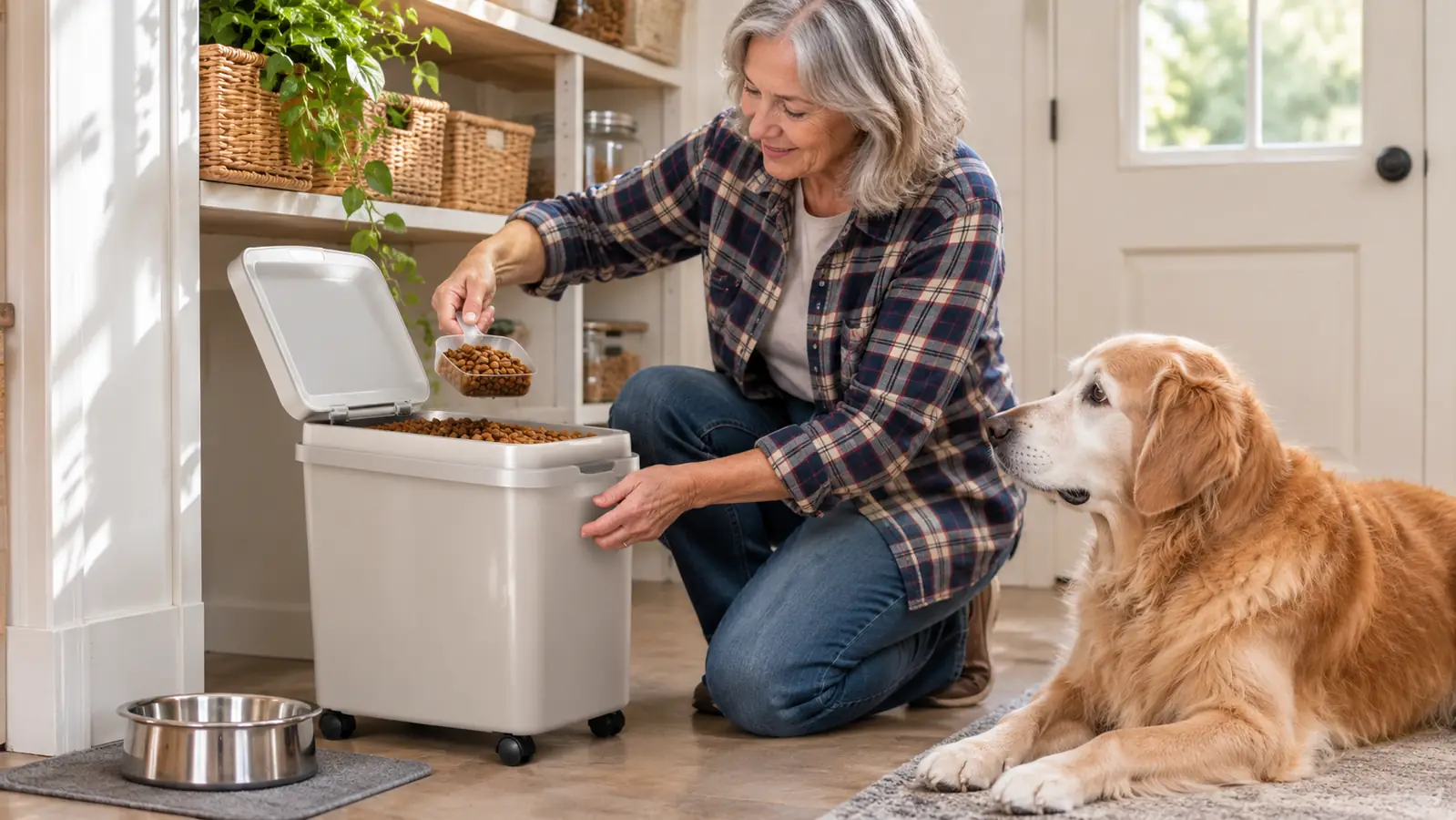
The only part of a storage bin that matters is the seal. The IRIS USA bin closes with snap-lock latches and an airtight seal, which is the word to look for, because moisture and humidity are what make kibble soft and then sour. A lid that rests on top is a lid that rests on top. You can hear the difference when you press it down.
Size matters in both directions. Mine is rated for up to 54 lbs and holds fifty quarts, which is generous for the 15 lb bag of Blue Buffalo Life Protection Senior 7+ I bring home, but the extra room means I am not scraping the sides every time I scoop. Too small a bin and the bag lives on the counter next to it, which defeats the whole exercise.
I measured before I ordered anything, because our pantry door is narrow and I did not want to wrestle a fifty-quart bin through it on a Tuesday afternoon. With the casters on, the footprint is 17.98 inches by 14.76 inches and it stands 23.44 inches tall, and I checked all three numbers against the door frame and the shelf above it before I clicked the button. Take the casters off and it sits at 21.88 inches tall, which matters if you plan to slide it under a shelf instead of rolling it out past a door. Ten minutes with a tape measure saved me the business of boxing something up and driving it to town.
Two details I did not expect to care about. The body is translucent, so I can see how much is left from across the pantry without lifting a lid. And the casters attach or come off, whichever you prefer. Mine are on, so the bin rolls out past the door and back. It is plastic, BPA free, and hand wash only. No dishwasher, which is fine, because nobody is putting a fifty-quart bin in a dishwasher anyway.
Step 3: Put It Somewhere Cool, Dry and Boring
Heat and light speed up fat going off, so the garage, the shed, the spot beside the oven and the sunny windowsill are all out. My pantry is a narrow closet by the back door. It stays cool, gets no direct sun, and is far enough from the stove that I never think about it, which is the highest compliment I can pay a storage spot.
Dry matters too. A weeping basement floor in spring is not the room, and a bin parked on damp concrete is a bin with a problem. The casters keep mine up off the floor instead of sitting in whatever is down there. Keep the lid latched. A latched lid is also the answer to any dog who has worked out that the food lives in there now.
The mistake I made for the first two winters was leaving the spare unopened bag in the garage, because that was where bags had always gone. A Bozeman garage in February and a Bozeman garage in July are two entirely different rooms, and neither one is kind to a bag of food sitting on a shelf. Now the spare lives on the closet floor inside the house, behind the vacuum cleaner where I have to move something to get to it, and it goes into the bin before a new bag gets bought. That one change did more for how the food smells on day one than any other thing I tried.
If you are in a small place and the only closet you have runs warm, the bottom of a dark bedroom closet still beats the counter beside the toaster. Cool, dim and out of the way is the standard. The bin does not need to be pretty to look at. It needs to open easily twice a day and stay closed the rest of the time.
Juniper has changed foods twice since January 2023. The container has not changed once, and the latch snaps the same way it did the first week.
Step 4: Scoop Dry, Measure Honestly, Wash Between Bags
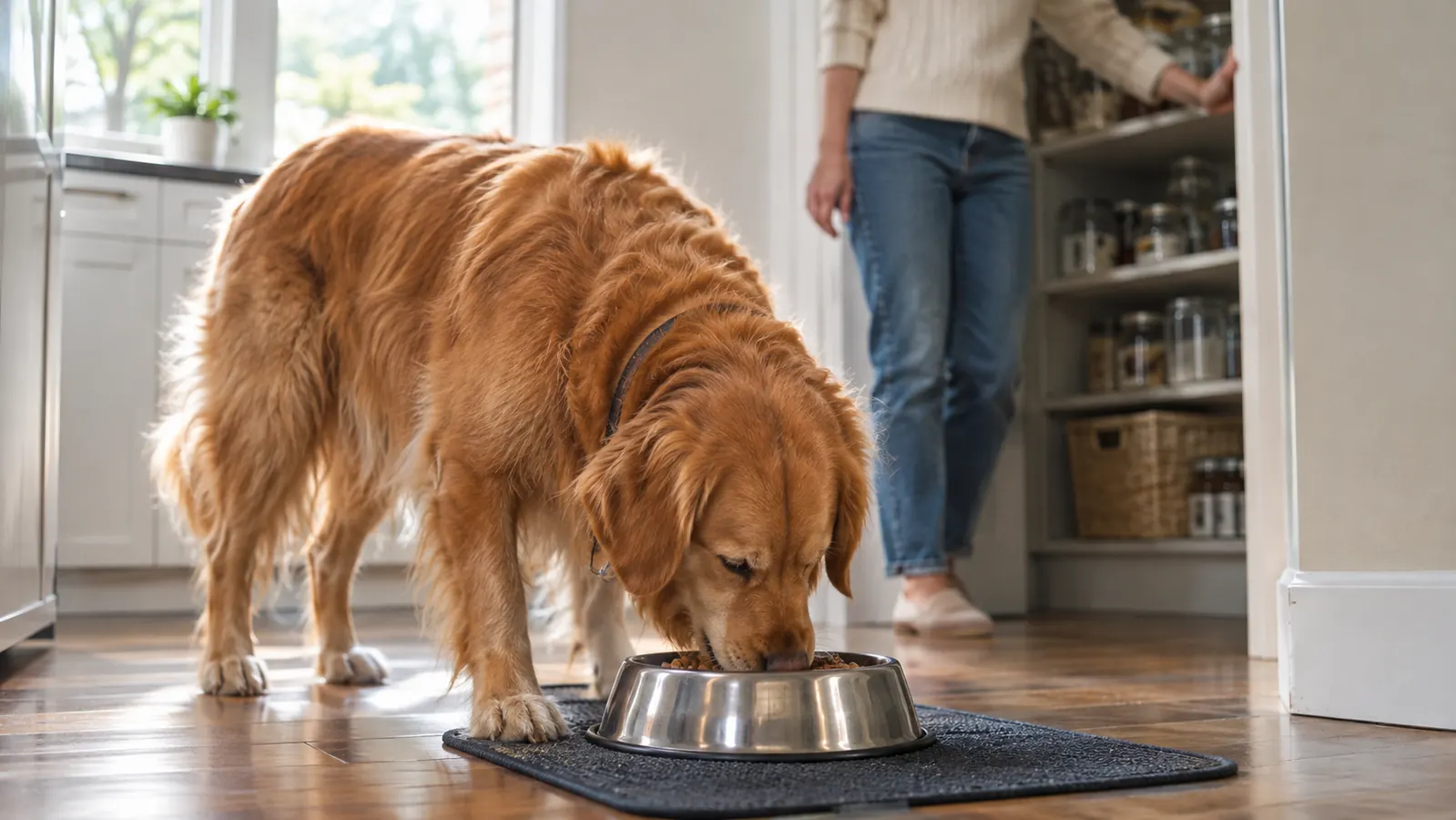
Keep a scoop in the bin and keep it dry. Wet hands, a wet scoop, or a scoop that came out of the sink and got a wipe on the dish towel all put moisture into the food, and moisture is what grows things. Mine is a plain plastic cup and it does not leave the pantry.
I keep that scoop standing upright in the bin with the handle up, and I dry my hands before I open the latch. That sounds fussy right up until the first time you pour a bag that went soft in three weeks and have to decide whether to feed it anyway. I fed it. Juniper ate it, slowly and without any of the usual carrying on, and I stood there in the kitchen feeling foolish. It was one bag out of many, and it did not hurt her, but I have not had to make that decision a second time because drying my hands takes two seconds and a soft bag costs a month of food.
Measure. Juniper eats twice a day, breakfast around seven and dinner around five, and her portion comes off the bag and from her vet. When she carried a little extra weight around age eight, switching from eyeballing to an actual cup was most of the fix, along with more walking. A bin that holds up to 54 lbs makes it very easy to be generous. Be exact instead.
When a bag is finished, wash the bin by hand, dry it completely, and let it air before the next bag goes in. Crumbs and dust at the bottom are the start of the next bag going off. It takes ten minutes, once every three weeks at Juniper's rate.
Step 5: Track the Clock and Trust Your Nose
The best-by date on the bag is for an unopened bag. Once air is in it, the clock runs differently. What I go by is simple: I want an opened bag finished in about six weeks, and a 15 lb bag every three weeks means Juniper never comes close. If you have a small dog and buy the biggest bag to save trips to the store, split it with someone who feeds the same food, or accept that the last third is the least fresh thing your dog will eat that month.
Your nose works better than any label. Fat that has turned smells like old crayons or the inside of a paint can. If the kibble smells sharp or flat instead of like food, it is old, and no container will bring it back. Watch the texture too. Clumping, or condensation on the underside of the lid, means moisture got in somewhere and it is worth finding out where.
What a container will not do is tell you why a dog stopped eating. If Juniper turned her nose up at a fresh bag out of a sealed bin, I would be at the vet, not shopping for a different bin. Storage keeps food good. It does not diagnose anything.
What Else Helps
Buy the size you will finish. Fifteen pounds every three weeks suits one sixty-four pound dog, and it means the bin is never holding the last dusty quarter of a bag for months on end. If you keep a spare unopened bag, keep it in a cool closet rather than the garage, and rotate it so the older one goes in first. That is the whole system, and it is not complicated.
Change foods slowly. When I moved Juniper to Blue Buffalo Life Protection Senior 7+ about a year and nine months ago, I mixed old and new over ten days, because her stomach does not accept surprises. A slow switch and an airtight bin solve two different problems, and both are worth the trouble. Neither one is a substitute for the other.
One small habit that has nothing to do with bins: write the date you opened the bag on that tape label you saved. I started doing it after I could not remember whether a bag was two weeks old or five, and it settled the question in a second. It costs nothing and it is the thing I would keep if I could only keep one.
Wash the bowl, keep the water fresh, and ask your vet about portions. I am not a vet and I do not play one here. Everything above is storage, which is plumbing, not medicine. What goes into the bowl, and how much of it, is a conversation for the person who has actually put hands on your dog.
The latch is the whole job. Everything else is convenience.
Snap-lock latches and an airtight seal, up to 54 lbs of dry food, casters you can attach or leave off, and a translucent body so you can see what is left without lifting the lid.
Amazon Check Today's Price on Amazon →