
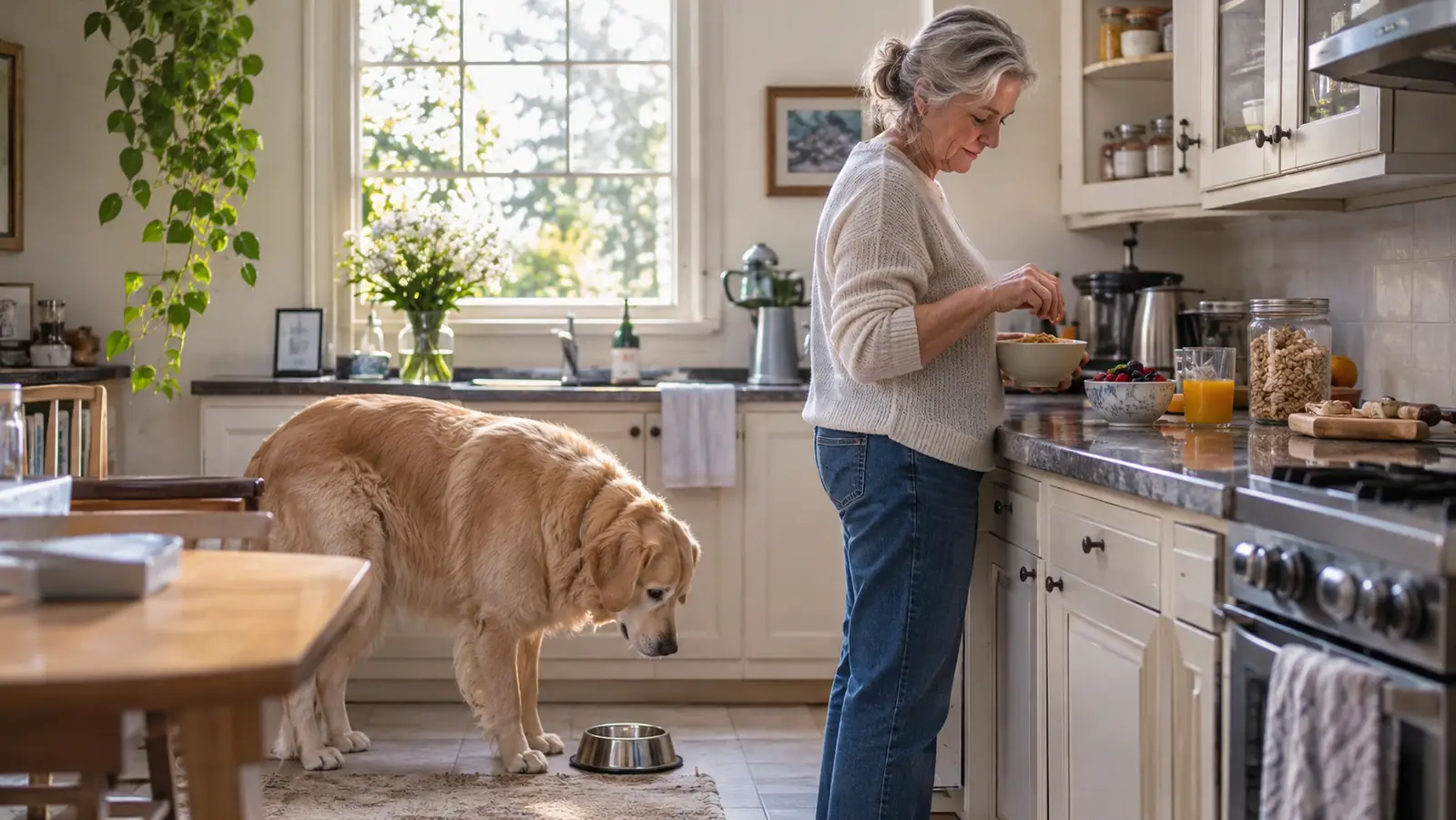
Juniper turned ten this fall. Golden Retriever, sixty-four pounds, white muzzle, and she still does a small hop at the back door when I reach for the leash. But somewhere around age eight she got stiff on cold mornings, and I started reading labels the way I used to read them in the school cafeteria I managed for years. Which is how I ended up in my kitchen last June holding an eight ounce bottle of Nordic Naturals Omega-3 Pet in one hand and a small measuring dish in the other, wondering whether I was meant to pour it or measure it.
Fish oil for dogs sounds like the simplest thing in the world. Pump it over the kibble. Done. Then you talk to six people and get six answers. One friend free-pours it like salad dressing. Another doubles the label amount because her dog is big. A third squirts it straight down the throat, which is a reliable way to teach a dog to avoid you at breakfast. I am not a vet and I am not going to play one here. What I can tell you is what my vet and I worked out for one aging Golden, what the label actually says, and the five steps I go through every morning so the oil ends up in the bowl instead of on the floor.
The bottle that lives in my fridge door
Nordic Naturals Omega-3 Pet is the liquid I have been pumping over Juniper's breakfast since June 2025. Eight ounces, unflavored, liquid fish oil with EPA and DHA, no artificial colors, flavors, or preservatives, and no fuss at the bowl. The label and the current price are on the listing.
Amazon Check Today's Price on Amazon →Step 1: Ask your vet before you open the bottle
Before I opened anything, I brought the bottle to Juniper's yearly checkup. I set it on the exam table and asked two questions. Is this a reasonable thing to be adding for a ten year old Golden, and how much. The vet wanted to know her weight that day, which was sixty-four pounds, what she was eating, the joint chewable she takes at breakfast, and whether anything else had changed since the last visit. That is a five minute conversation and it is worth every minute of it, because a supplement is still something you are putting inside your dog.
Two things I would say to anyone doing this for the first time. Bring the actual bottle, not a photo of it, because the back label is the part that matters and the front is mostly marketing. And write down what you are told. I keep a small notebook in the kitchen drawer with Juniper's weight at each visit, her vaccine dates, and now one line about the oil. If your dog takes any medication, or has something your vet is already managing, that conversation is not optional. Ask. A routine borrowed out of an article, including this one, is not an amount for your dog.
While you are there, ask what would make you pick up the phone. My vet gave me a short list of signs and I will not reprint it here, because it is her list and your dog is not my dog. The point is to know in advance rather than deciding at seven in the morning with a bowl in your hand. That is a better use of five minutes than any amount of reading customer reviews on a product page, and I say that as someone who reads plenty of them.
Step 2: Read the label for the amount, then read it for the bottle
The label gives the amount by weight, and I am not going to print a number here, because your dog and my dog are not the same dog and a figure copied out of an article is exactly how mistakes happen. Read the label, then read it again, because there are two different pieces of information on it. How much to give. And what is actually in the bottle. This one is a liquid, eight ounces, 237 milliliters, with fish oil and both EPA and DHA. Unflavored. It arrives with a pump, which matters more than it sounds like it should.
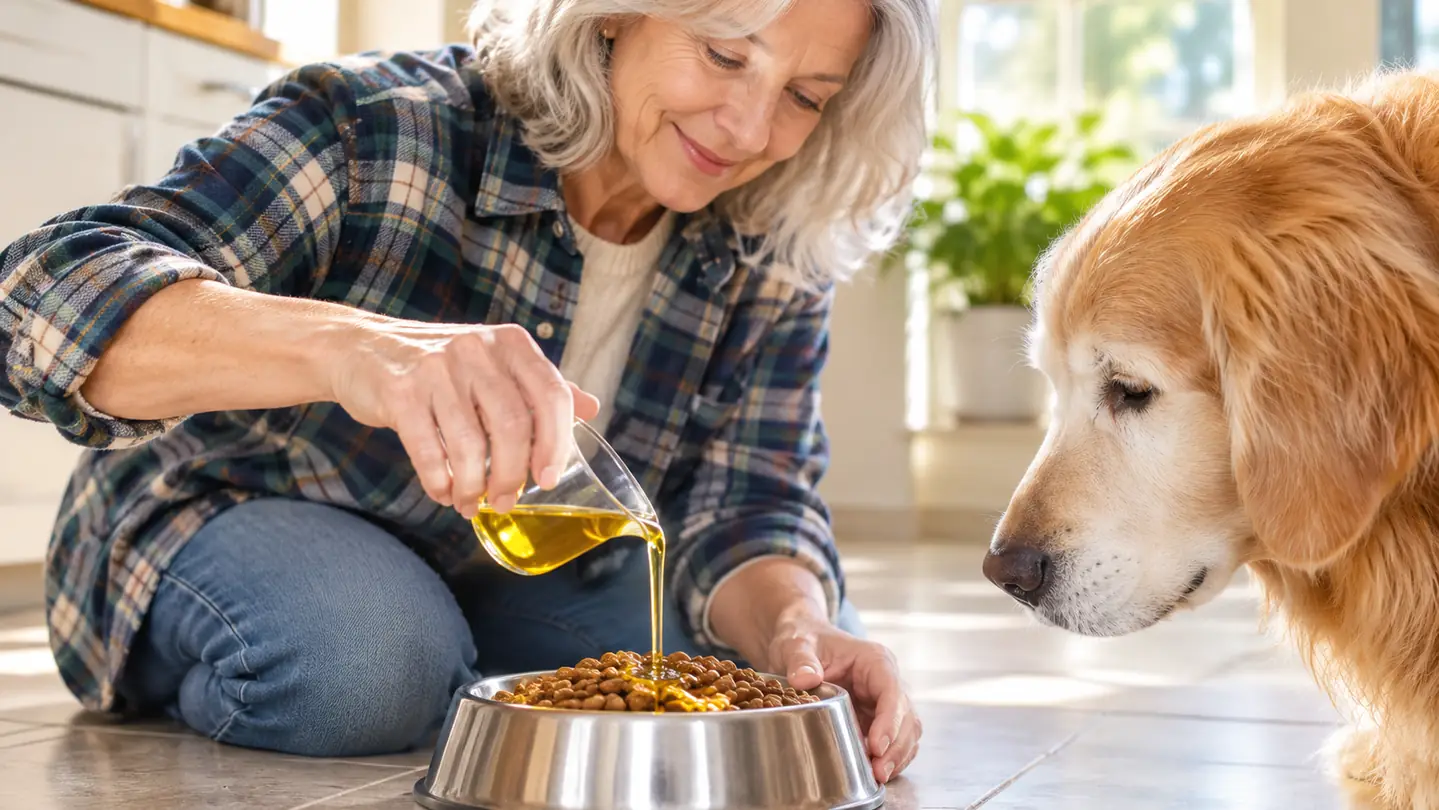
The milligram figure on the front of a bottle you pump is easy to misread, and I did misread it at first. Do not guess at what it means. Follow the serving information on the back with your vet, then count pumps into a small dish until you can see the amount with your own eyes. A pump is a fixed measure, and that is the whole point of it. I count into the dish, tip the dish over the kibble, and I do not free-pour into the bowl, because on a dark morning in February I will get it wrong and so will you.
The other label details are the kind I care about after years of reading ingredient lists for a cafeteria full of children. The oil is in the triglyceride form, the form naturally found in fish, and there are no artificial colors, flavors, or preservatives in it. It is gluten free and dairy free. None of that turns it into a treat. It is a measured thing you add to a bowl, and the label is the instruction sheet. I keep the bottle in the fridge and read the same three lines every time I open it, which is probably unnecessary and takes about four seconds.
Step 3: Start at half for the first week and watch the yard
Juniper has a sensitive stomach. A sudden food change has cost me a rug before, so I do not introduce anything at full amount on day one. My vet agreed with a plain plan. Half the label amount for the first week, then the label amount if everything stays calm. I wrote half on the cap in marker so I would not talk myself into more on a Wednesday afternoon when she was looking at me with those eyes.
What you are watching for is dull and unglamorous and it is the whole job. The stool, first thing in the morning, for four or five days. Whether she is drinking normally. Whether she is still cleaning her bowl and still keen for her walk. If something goes sideways, you stop, wait a couple of days, and call your vet before you try again. Do not push through it, and do not decide the answer after one bad morning. Half for a week, then the full amount, is not a clever plan. It is a careful one, and careful is what this whole routine runs on.
There is also a timing question people forget. If your dog already gets a joint chewable, a preventive, or anything else at breakfast, do not stack everything into one mouthful and hope for the best. I give Juniper her chewable first, then the kibble with the oil over it, and I keep the two about a minute apart. It is not science. It is bookkeeping, so that if something changes I know which thing changed.
The first morning I measured instead of poured, the bowl came back clean. Two months in, the dry, flaky patch along her spine had filled in and her coat had that slick feel under my hand again.
Step 4: Put it on the food, not in the dog
This one sounds like it does not need saying. It does. Oil goes on the food, in the bowl, at the meal. Not squirted into the back of the mouth, which is a good way to make a dog distrust breakfast and a poor way to keep the amount where it belongs. I pump it over Juniper's kibble at seven, she eats it out of the same slow feeder she has used since 2024, and by the time the coffee is made the bowl is clean.
Add it to a meal, not to a bowl that sits out all day, and keep it away from anything hot. If your dog is a grazer who picks at kibble from noon to six, ask your vet how they would handle the timing. I keep a paper towel by the bowl because the pump leaves a little oil on the rim, and I wipe it before the bottle goes back in the fridge. That is the entire technique. Measure. Pour on food. Wipe the rim. Put the bottle away.
One more thing, because I pet sit a lot of dogs around Bozeman. When I am sitting for a client's dog, I do not add anything to that dog's bowl that the owner did not leave out on the counter. Not a drop of Juniper's oil. The kindest thing you can do for someone else's dog is follow the instructions you were handed and text a photo when you are unsure.
Step 5: Store it cold and write the open date on the cap
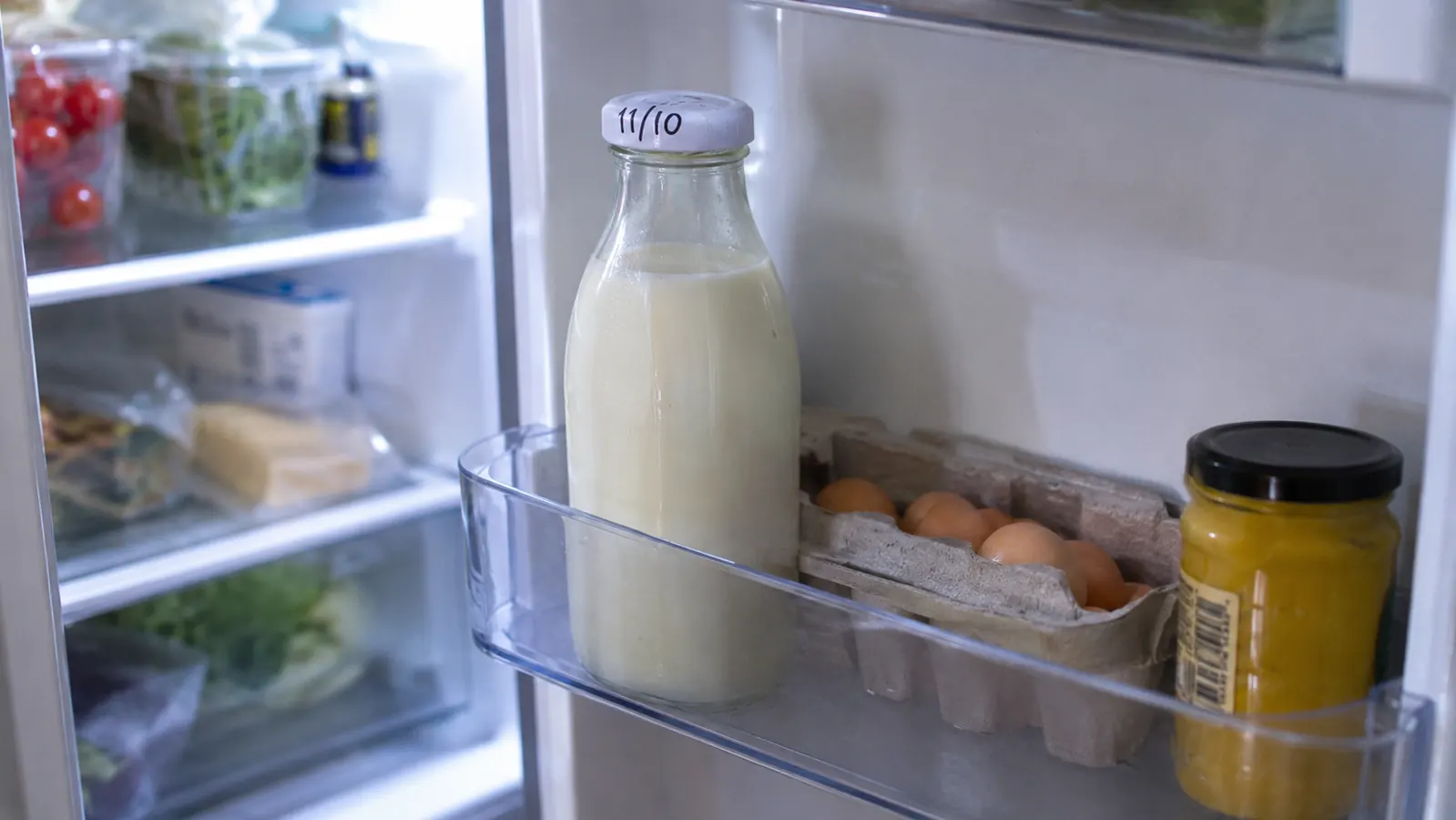
The bottle lives in the fridge door once it is open, next to the eggs, where I cannot forget about it. Before that it sits in the pantry with the kibble. What matters more than where it sits is the marker. I write the open date on the cap, and I keep one line in the notebook: what I gave, when I started, and when I noticed anything change. When you have been doing something every day for a year and a half, memory is useless. The note is the record. The marker is the cheapest piece of equipment in this whole routine and the one I would replace first.
Eight ounces lasts us a good stretch. When a bottle is done I rinse the pump, let it dry, and start the next one with a fresh date on the cap. I also keep it out of the sun and away from the stove, which sounds obvious until you see where people keep things. And when the season turns, which in Montana is an event, I look at the coat again and at how she moves on the icy mornings. That is the review. The bowl, the coat, the walk, the note. Nothing more scientific than that.
What Else Helps
Fish oil is the small thing in this routine, not the big one. The big ones are dull. Measured portions, twice a day, breakfast at seven and dinner at five, with the amount from the bag and from her vet. Moving Juniper to a senior formula over about ten days, mixing old and new, so her stomach did not revolt. Keeping her weight down. A morning walk and a shorter one in the evening, shorter still when the sidewalks are ice. That is what took a few extra pounds off her over the first months, and it is worth more than anything I can pump out of a bottle.
The rest of the kitchen is a short list. Kibble lives in a wheeled container in the pantry by the back door, hand washed between bags, bought after mice found a bag in the garage one winter. Dinner goes into a slow feeder because she used to inhale it in under a minute and sometimes bring it straight back up. She takes a joint chewable at breakfast, on the label and her vet's say-so. And an unflavored fish oil goes over the top of it all.
If you change five things at once you learn nothing, so I changed one thing at a time and wrote down what happened. That is the least glamorous advice in this article and the only advice I would bet on. Keep the yearly checkup. Ask about the oil while you are there. Weigh the dog on the same scale each visit. And give it a season before you decide whether it is doing anything, because a week tells you almost nothing except whether the stomach is going to complain.
The five minutes I spend at the bowl every morning
Nordic Naturals Omega-3 Pet, eight ounces, unflavored liquid with a pump and a label I actually read. One measured pour over breakfast kibble, the open date on the cap, the bottle back in the fridge door. If that routine sounds like yours, the listing is where to start. Ask your vet about the amount for your dog before you open it.
Amazon Check Today's Price on Amazon →